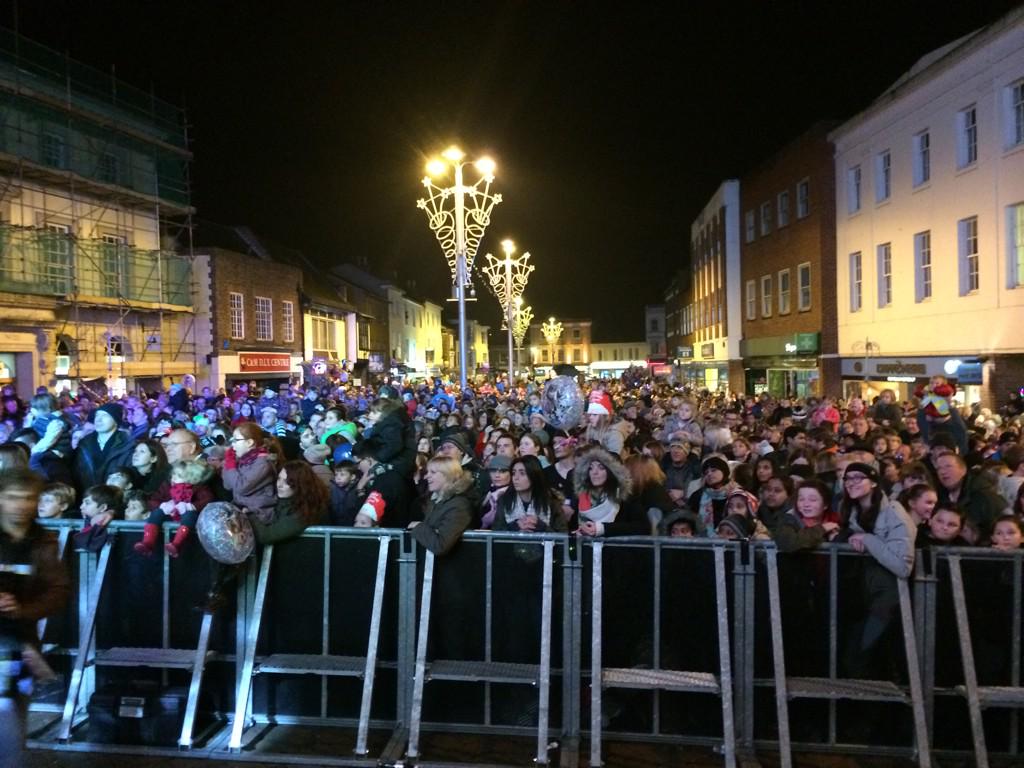
"Barrier" gets used as a catch-all, but front of stage barriers and crowd control barriers are two different products built for two different jobs. Confuse them and you either overspend on kit you don't need, or — far worse — put the wrong barrier in front of a surging crowd. Here's the difference, and how to know which one your event actually calls for.
What a Crowd Control Barrier Is
This is the one most people picture: the interlocking metal barrier, sometimes called a pedestrian barrier, that hooks together end to end to form a continuous run. They're light, quick to deploy, and built for guiding and organising people rather than physically resisting them. Queue lanes, pedestrian walkways, cordoning off an area, separating the public from a road or a work zone, marking out a VIP section — that's their world. They'll comfortably handle people leaning on them or a bit of casual pressure, but they are not engineered to hold back a crowd that's pushing forward with force.
What a Front of Stage Barrier Is
A front of stage barrier — also called a Mojo barrier, stage barrier or pit barrier — is a different animal entirely. It's built around a load-bearing 'A' frame with a footplate that the front row actually stands on, which is what anchors the whole system against the weight of the crowd. It sits directly in front of the stage and creates a protected gap behind it, the "pit", where security and medics can work and reach people over the top. Where a crowd control barrier guides people, a front of stage barrier is designed to absorb and redirect serious horizontal pressure without giving way.
The Difference That Actually Matters
Strip everything else away and it comes down to one thing: is the barrier designed to resist crowd surge, or just to direct movement? That's not a marketing distinction — it's a structural and legal one. UK event safety guidance (the "Green Guide") expects a front of stage barrier to withstand around 5kN per metre of lateral load, roughly half a tonne pressing against every metre of its length. A standard crowd control barrier is built to no such rating. Put a pedestrian barrier where a stage barrier should be, and under a real surge it can fail — which is exactly how crowd crush incidents happen.
When You Need Front of Stage Barriers
The trigger is crowd density and the potential for forward pressure, not the size of the event on paper. If you've got a stage, a standing audience, and the kind of act that pulls people toward the front, you need a barrier rated for it — full stop. Concerts, festivals, gigs in tents or fields, any standing performance where people will push toward the front: that's front of stage territory. For very large or outdoor crowds, that might mean a curved or multiple-barrier layout with proper side escapes, but the principle is the same — the front line has to be load-bearing.
When Crowd Control Barriers Are the Right Call
Plenty of events never generate that kind of pressure, and for those, crowd control barriers are exactly right — and more practical. Managing entry queues, routing pedestrians, lining a parade or race route, cordoning off a car park or a no-go zone, separating foot traffic from vehicles: all jobs where you want to organise people, not contain a surge. They're lighter, faster to set out over long distances, and easier to reconfigure on the day.
Most Events Need Both
It's rarely either/or. A typical festival uses front of stage barriers at the stage where the pressure is, and crowd control barriers everywhere else — queue lanes at the gates, walkways, VIP and back-of-house segregation, emergency egress routes. The skill is matching the barrier to the risk in each zone rather than buying one type and hoping it covers everything.
Not Sure Which You Need?
That's what we're here for. Tell us about your event — the layout, the expected crowd, where the pressure points are — and we'll spec the right barriers for each part of it and make sure they turn up when they're supposed to. Get in touch and we'll sort it.